For insurance brokerages
The answer is in the policy wording. Finding it shouldn’t take the morning.
I build assistants for brokerages of 10 to 200 people: they find the clause that answers a client’s question, compare it across insurers and leave the reply ready for your team to review and send. On top of the management system you already have, not instead of it.

Three things that take hours in a brokerage
01
Finding the right information in time
Policies, wordings and claims are spread across emails, folders and the management system.
02
Renewals put together by hand
Comparing wordings, exclusions and deductibles across several insurers, one document at a time.
03
Admin that eats into advice
Incidents, paperwork and follow-ups take the hours your team should spend selling.
How it would look in your brokerage
Demonstration with fictitious data: three made-up insurers and a made-up client.
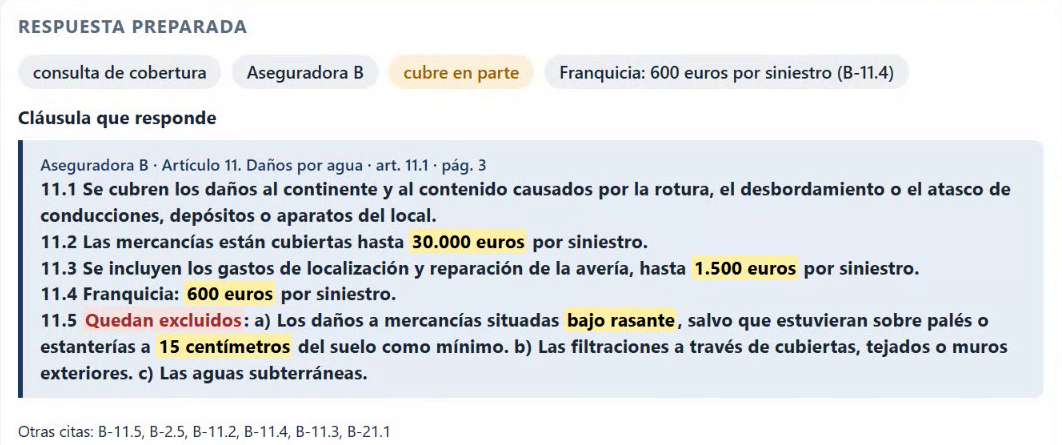
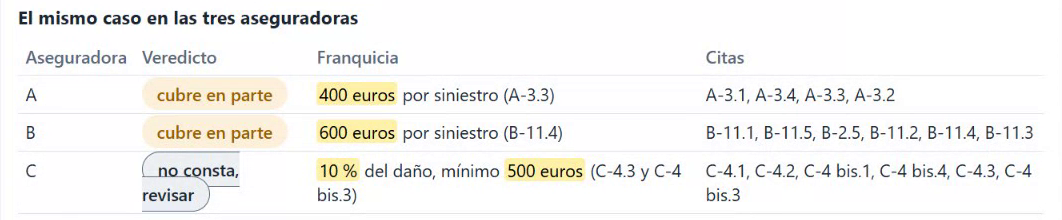
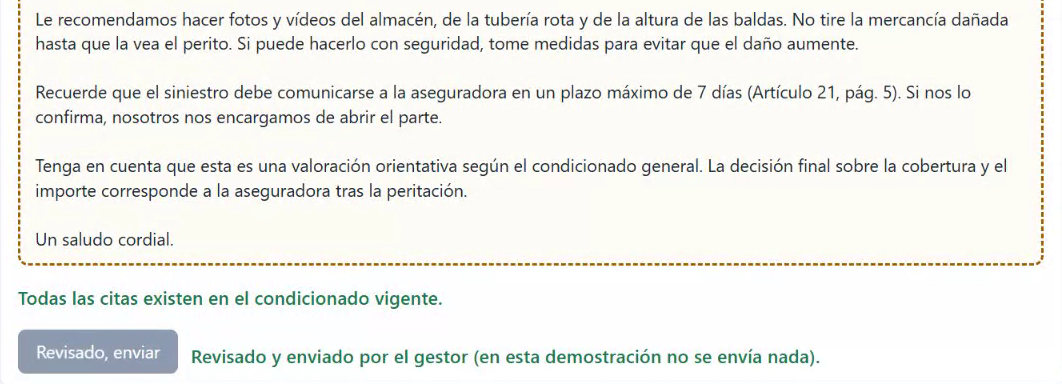
- A client writes: the storeroom has flooded because a pipe burst. Is it covered?
- The assistant reads the current wording of the client’s insurer and cites the clause, the article and the page, with the deductible and the exclusions that apply.
- It compares the same case across the three insurers.
- When the wording does not answer the question, it says so (“not stated, check the specific conditions”) instead of guessing.
- It leaves a draft reply. Your team reviews it and sends it; nothing goes out on its own.
One week
How we start: a one-week diagnostic
A short, fixed-scope look at one process (renewals, coverage questions or claims) that ends with three deliverables.
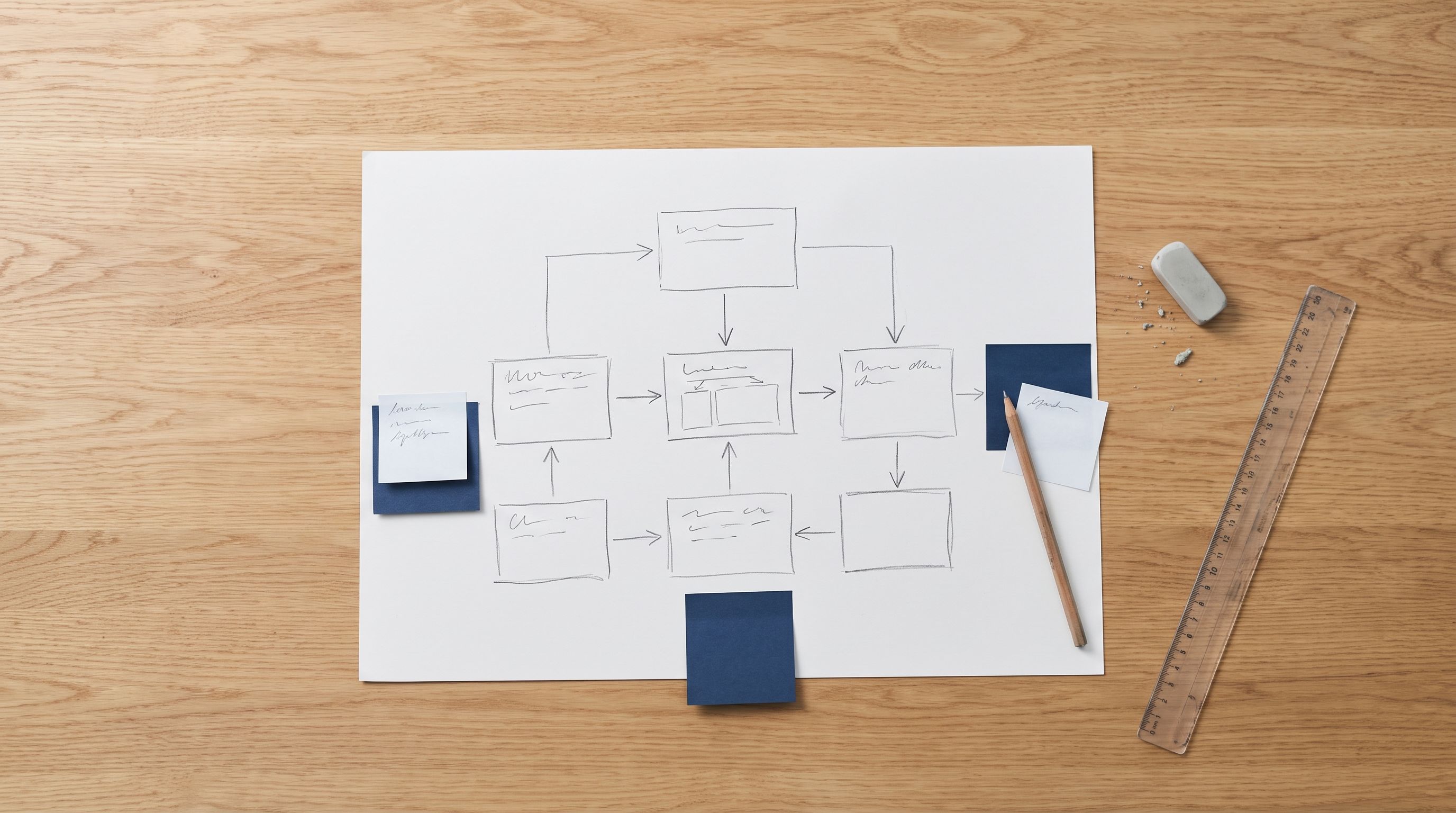
Process map
How the work is done today and where the hours go.
Technical feasibility
What can be connected to your management system and documents, and what cannot.
Plan with scope
What is worth automating, what is not, and what a project would include and exclude.
If you then commission the project, the cost of the diagnostic is deducted.
How your data is handled
- The assistant prepares drafts; the decision and the signature stay with your team.
- Processing in the EU and a data processing agreement with every provider.
- The first phase avoids health data and other special categories.
- Every answer is logged with the sources it used.
Common questions
Does it work with our management software?
The assistant works alongside the software you already use, not instead of it. The diagnostic shows what can be connected to your software and your documents, and what cannot.
Do we have to change how we work?
No. The assistant prepares drafts within the process you already have; the decision and the sending stay with your team.
How long until it is running?
The diagnostic takes one week. An assistant on your systems, 8 to 12 weeks.
Twenty minutes to see if it fits
Tell me which process takes your team the most time. If AI is not the answer, I will tell you.
On the call you tell me which process takes your team the most time, and I tell you whether AI helps and where I would start. No commitment.
Or call me on +34 686 71 14 37